
Have you ever wondered why a headache tablet works instantly for your friend but takes an hour to kick in for you? Or why some people experience severe side effects from a common antibiotic while others feel nothing at all?
For decades, global medicine has operated like a clothing store that only sells one size: “Medium”. If you’re a “small” or an “extra-large”, you’re told to just make it work. In the world of healthcare, this “one size fits all” approach isn’t just uncomfortable; it can be dangerous. At the Institute of Genomics and Global Health (IGH), we are leading a medical revolution. We are moving away from “average” medicine and moving toward precision medicine healthcare tailored specifically to the unique genetic blueprint of the African person.
The “European Standard” Problem
To understand why medicine needs to change, we have to look at where it comes from. Currently, about 80% of the world’s genomic data used in medical research comes from people of European descent. Yet, Europeans make up only a small fraction of the global population.
Africa, on the other hand, is the most genetically diverse place on Earth. Because modern humans originated in Africa, our DNA has had hundreds of thousands of years more than any other population to develop variations. There is often more genetic difference between two ethnic groups in Nigeria than there is between a person from Norway and a person from Italy.
When we use medicines tested primarily on European DNA, we are essentially using a map of London to navigate the streets of Lagos. It might get you close, but you’re going to get lost eventually. IGH is building the map we actually need.
What is Precision Medicine? (The Tailor Analogy)
Think of traditional medicine like a “ready-to-wear” suit. It’s mass-produced based on an average body type. It fits most people okay, but it’s perfect for almost no one.
Precision Medicine is like a bespoke, custom-tailored suit.
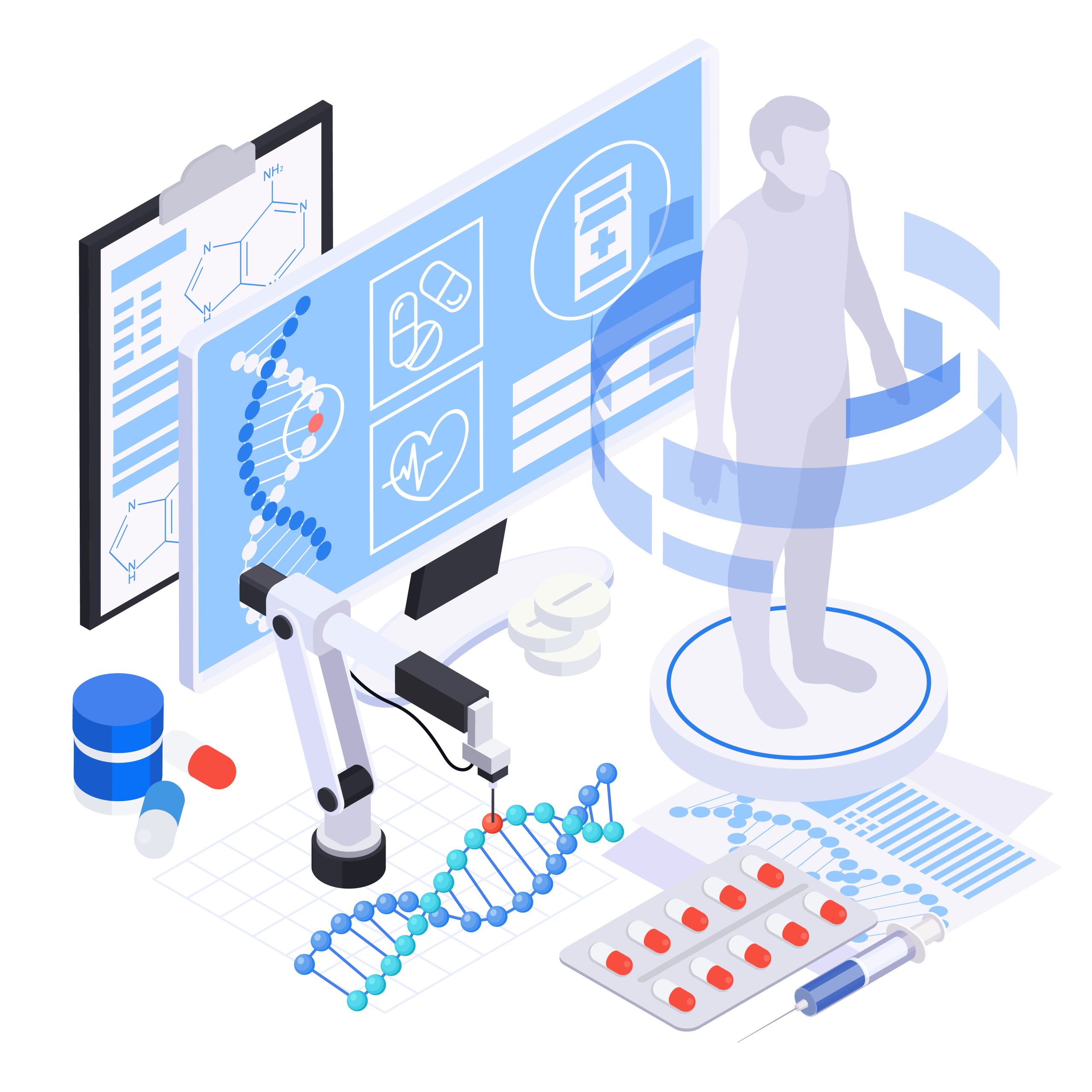
- The Measurement: Instead of using a tape measure, we use genomic sequencing to “measure” your DNA.
- The Cut: We identify specific markers in your code that tell us how you process chemicals.
- The Fit: Your doctor prescribes a specific drug at a specific dose that your body is biologically programmed to handle.
This field is often called Pharmacogenomics: the study of how genes affect a person’s response to drugs.
Why Africa Can’t Wait
For policymakers and health enthusiasts, the stakes are incredibly high. In Africa, we face a “double burden” of disease. We are still fighting infectious killers like malaria, HIV, and TB, while simultaneously seeing a massive rise in non-communicable diseases like hypertension, diabetes, and cancer.
The “one size fits all” model fails us in both categories:
- Infectious Disease: A vaccine that works 95% of the time in the US might only work 60% of the time in certain African populations because of genetic variations in our immune response.
- Chronic Disease: Common blood pressure medications (like ACE inhibitors) have been shown to be less effective in people of African descent compared to other groups.
By ignoring these genetic nuances, we waste billions of dollars on ineffective treatments and lose countless lives to preventable side effects.
IGH: The Engine of African Precision Medicine
Institute of Genomics and Global Health (IGH) marks a shift from reacting to outbreaks to proactively building a foundation for personalised health. We aren’t just observing these problems; we are solving them through three core pillars:
1. The African Bio-Bank
At our facility in Ede, Nigeria, we are building a massive repository of genetic data. By safely and ethically cataloguing the diversity of African genomes, we are creating the “reference library” that pharmaceutical companies and researchers must use if they want to create drugs that actually work for us.
2. Cutting-Edge Capabilities
Our lab isn’t just “good for Africa”: it is world-class. With high-throughput sequencers and high-performance computing clusters, we can process biological data at a scale that was unimaginable a decade ago. We have the “eyes” to see the minute differences in DNA that determine whether a drug will be a cure or a poison.
3. Human Capital (The “New Guard”)
We have trained over 3,500 scientists. These aren’t just lab technicians; they are the future architects of African health. By empowering young African students and researchers, IGH ensures that the solutions for African problems are dreamt up, tested, and implemented by Africans.
A Call to Action for Stakeholders
To Research Funders: Investing in IGH is an investment in efficiency. Precision medicine reduces hospital stay times, eliminates the cost of “trial-and-error” prescribing, and prevents adverse drug reactions. It is the most cost-effective path to a healthy continent.
To Policy Makers: We need regulations that encourage genomic research and protect the data of our citizens. IGH is ready to partner with you to create a “Genomic Sovereignty” framework where Africa owns its data and its future.
To Young Scientists: The frontier of medicine isn’t in a chemistry beaker; it’s in the data. We need bioinformaticians, geneticists, and ethicists. If you want to change the world, come help us decode the most diverse population on the planet.
Conclusion: The Future is Personal
The era of “one size fits all” is coming to an end. We are entering an age where your medical treatment will be as unique as your thumbprint.
At the Institute of Genomics and Global Health (IGH), we are proud to be the lighthouse for this movement in Africa. We are proving that our genetic diversity isn’t just a point of scientific interest—it is our greatest strength. By understanding our code, we are taking the guesswork out of medicine and ensuring that every African has access to healthcare that actually fits.
The “medium” suit never really fit us anyway. It’s time for something made to measure.