
Across many cultures, animals have long been used as sources of healing. In parts of Nigeria, animal parts are used not only for traditional medicine but also for spiritual and belief-based practices, a practice known as ‘zootherapy’. While deeply rooted in cultural traditions, this practice raises important questions about public health, wildlife conservation, and environmental sustainability.
A recent study examined the use of animal-derived products for medicinal and belief-based purposes in urban centres across Southwestern Nigeria, offering new insights through the One Health framework, which recognises that human health, animal health, and environmental health are closely interconnected.
How the Study Was Conducted
Researchers used a mixed-methods approach to better understand the scope and motivations behind zootherapy practices.
The team collected data through:
Semi-structured questionnaires
Focus group discussions
Participant observations
Fieldwork was carried out in open markets and traditional healing homes in Lagos, Ogun, Oyo, Ondo, and Osun states. These locations are major hubs for the trade of wildlife products and traditional remedies.
To understand potential health and conservation risks, the researchers also reviewed scientific literature and consulted the International Union for Conservation of Nature (IUCN) Red List of Threatened Species, which tracks the conservation status of wildlife globally.
What the Researchers Found
A Widespread Practice Rooted in Tradition
The study documented 53 zootherapeutic practices involving 41 different animal species. For many practitioners, knowledge of these remedies is passed down through generations, often within families.
Traditional healers and herbal practitioners were the largest group involved, reflecting the enduring role of traditional medicine in healthcare across Nigeria.
Hidden Threats to Wildlife
Although many participants believed the animals they used were abundant, nearly 44% of the species involved are classified as vulnerable or endangered according to the IUCN Red List.
Some of the species identified include:
The slender-snouted crocodile
The hinge-back tortoise
The hooded vulture
These animals already face pressure from habitat loss and hunting. Continued demand for their body parts could further threaten their survival.
Public Health Risks Often Overlooked
The research also revealed significant public health concerns.
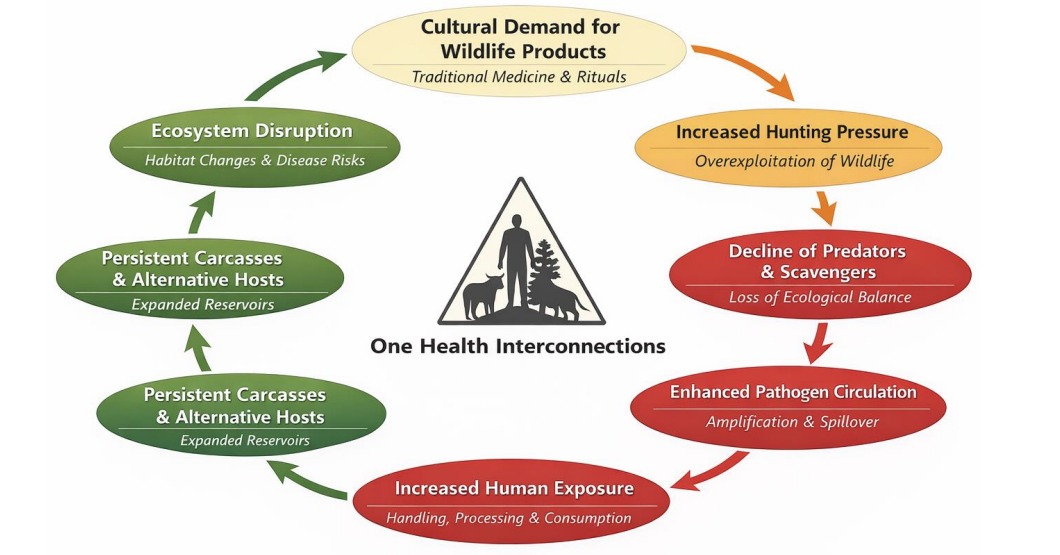
About 95% of the animal species used in these practices are known to carry pathogens that can infect humans. Scientific evidence shows that 38 of the species identified are associated with viruses, bacteria, or parasites capable of causing zoonotic diseases i.e diseases that spread from animals to humans.
Despite this, many practitioners believed that wild animals are naturally “pure” and unlikely to transmit diseases. Others felt that heating or preparing animal parts would eliminate harmful germs.
This gap between scientific knowledge and practitioner beliefs could increase the risk of disease spillover, particularly in busy urban environments.
Why Zootherapy Persists
The study highlights several factors that sustain the practice:
Cultural beliefs: Traditional healing practices remain deeply respected and widely trusted in many communities.
Economic incentives: The sale of animal parts provides income for traders and practitioners.
The wild meat trade: Animals hunted for meat often supply body parts that are later used for medicinal or spiritual purposes.
Urban centres also attract practitioners because they offer larger customer bases and better access to wildlife products.
Why This Matters: A One Health Challenge
The findings reveal how closely human health, wildlife conservation, and economic livelihoods are linked.
The continued use of wildlife in traditional medicine can contribute to:
Zoonotic disease risks
Transboundary animal diseases
Declining wildlife populations
Ecological imbalance
These issues extend beyond Nigeria. Around the world, interactions between humans and wildlife have played roles in outbreaks such as Ebola, SARS, and COVID-19, highlighting the importance of understanding how such practices shape disease risk.
The Way Forward
Rather than dismissing traditional practices outright, the study calls for balanced and culturally respectful solutions.
Key recommendations include:
Stronger monitoring of wildlife trade and use
Public awareness campaigns about zoonotic disease risks
Risk communication tailored to traditional practitioners
Promotion of sustainable and safer alternatives
Importantly, the researchers emphasise that any intervention must engage practitioners and communities, recognising the cultural and economic realities that sustain zootherapy.
A Shared Responsibility
Zootherapy in Southwestern Nigeria reflects a complex intersection of culture, livelihood, health, and biodiversity. Addressing its risks requires collaboration between scientists, policymakers, traditional healers, conservationists, and local communities.
By applying the One Health approach, societies can work toward solutions that protect public health, preserve wildlife, and respect cultural traditions—ensuring that both people and nature can thrive together.
Read Publication here: https://www.mdpi.com/2076-2615/16/3/502