
Demystifying the Code: A Layman’s Guide to Genomic Sequencing
Imagine you are holding the most complex instruction manual ever written. It isn’t for a car, a skyscraper, or a supercomputer. It is the manual for you.
Inside every cell of your body, there is a biological “book” containing three billion letters. These letters dictate the colour of your eyes, how your body digests food, and most importantly how you fight off diseases. For decades, this book was locked in a language we couldn’t quite read. But today, we are not just reading it; we are using it to rewrite the future of public health in Africa.
At the Institute of Genomics and Global Health (IGH) formerly known as the Africa Centre of Excellence for Genomics of Infectious Diseases (ACEGID) we are the “translators” of this code.
Don’t see this as one of those science write ups with loads of fancy jargons and big words that can make one loses their front tooth, but see it as a book written for you, so you can know you that your ordinary eyes can’t see.
This guide is designed to strip away the jargon and show you how genomic sequencing is the most powerful tool we have to protect our continent.
What Exactly is Genomic Sequencing?
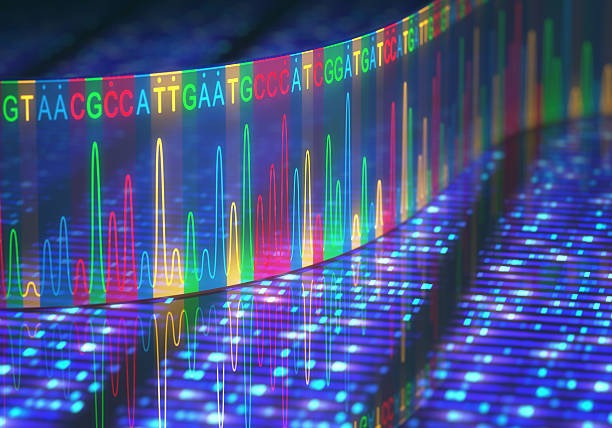
To understand sequencing, we first have to understand DNA. Think of DNA as a long, spiralling necklace made of four different coloured beads: Adenine (A), Thymine (T), Cytosine (C), and Guanine (G).
The specific order of these beads, the sequence, is the “code”. If the beads are arranged in one way, the body knows how to make a heart cell. If they are arranged slightly differently, it might mean a person is more susceptible to malaria or that a specific virus has mutated to become more contagious.
Genomic sequencing is simply the process of using high-tech “readers” to look at that necklace and write down the exact order of the beads, and so on.
The “Google Maps” of Health
Think of a genome like a map. Without sequencing, health practitioners are driving through a city in the dark. They know they are in a city (a patient is sick), but they can’t see the street signs. Genomic sequencing turns the lights on. It tells us exactly where the “potholes” (diseases) are and provides a GPS route to the “hospital” (the cure).
How IGH Reads the Code: The Process Simplified
You might imagine genomic sequencing happens in a futuristic movie lab with bubbling green liquids. In reality, at IGH, it is a precise, disciplined four-step process:
1. The Sample: It starts with something simple: a drop of blood, a nasal swab, or even a vial of wastewater.
2. Extraction: We use chemicals to “pop” the cells open and pull out the DNA or RNA (the genetic material).
3. The Library Prep: We cut the long strands of DNA into smaller, readable chunks and add “tags” so our machines can recognise them.
4. The Readout: We place these samples into powerful machines called Next-Generation Sequencer. These machines use lasers and sensors to “read” the letters at lightning speed.
Finally, our team of Bioinformaticians, think of them as biological computer programmers uses supercomputers to piece those billions of letters back together to see the full picture.
Genomics in Africa: Why Africa? The “Diversity Gap”
For a long time, the world’s genomic data was heavily skewed. Over 80% of genomic studies were based on people of European descent. This is a massive problem because Africa is the most genetically diverse continent on Earth.
Humans originated in Africa, meaning our genetic “code” has had the most time to change and adapt. If we only study European DNA, we are missing the full story of human health.
IGH is bridging this gap. By studying African genomes on African soil, we ensure that:
Medicines work for us: Some drugs designed in the West don’t work as well for African bodies because of genetic differences.
Vaccines are effective: We can track how viruses change specifically within our borders. (Covid -19 is a recent experience)
Precision Medicine: We can move toward “personalised” healthcare where a doctor gives you a treatment based on your specific genetic makeup.
IGH: From ACEGID to a Global Powerhouse
You may have known us as ACEGID. Our transition to the Institute of Genomics and Global Health (IGH) isn’t just a name change; it is an evolution of our mission.
Based in Ede, Nigeria, IGH has become the “Gold Standard” for genomics in Africa. We aren’t just a lab; we are a fortress of health security. Our capabilities rival the top institutions in the world, featuring:
High-Throughput Sequencing: The ability to process thousands of samples simultaneously.
Advanced Training: We have trained over 3,500 scientists from across Africa, creating a “brain gain” for the continent.
Rapid Response: When a new outbreak occurs, we don’t wait for samples to be shipped to Europe or America. We sequence them right here, in hours, not weeks.
Impact in Action: Success Stories
The true power of genomics isn’t in the machines; it’s in the lives saved. Here is how IGH has changed the narrative of African health:
1. The COVID-19 Sentinel
When the pandemic hit, IGH was at the forefront. We sequenced the first genome of SARS-CoV-2 in Africa within 48 hours of receiving the sample. This allowed African governments to see exactly how the virus was entering the country and which variants were spreading, enabling data-driven lockdowns and travel policies.
2. Defeating “The Ghost”: Lassa Fever
Lassa fever has plagued West Africa for decades. At IGH, we used sequencing to prove that the virus wasn’t suddenly becoming more “deadly” or “contagious” during certain outbreaks; rather, our diagnostic tools were just getting better at finding it. This prevented mass panic and helped focus resources on environmental control.
3. The Ebola Shield
During the 2014-2016 Ebola outbreak, our team worked on the front lines. By sequencing the virus in real time, we could tell health officials exactly how the virus was moving from person to person. This “molecular contact tracing” is like having an invisible spy in the enemy camp.
4. Malaria and Beyond
We are currently using genomics to track “drug-resistant” malaria. By reading the parasite’s code, we can see if it has developed a “shield” against common medicines. This allows policymakers to switch to more effective treatments before a major crisis occurs.
A Note to Our Stakeholders
To Policy Makers: Genomic data is the “new oil.” It is a strategic asset. By investing in IGH and genomic surveillance, you are investing in a shield that protects your economy from the devastating costs of unchecked outbreaks. Health security *is* national security.
To Research Funders: Every dollar invested in IGH doesn’t just fund a study; it builds infrastructure. It funds the reagents, the electricity, and the brilliant African minds that will discover the next generation of cures. We have the talent and the tech; we need the sustained partnership to scale.
To Young Scientists: The future of biology is digital. If you want to be at the cutting edge of science, genomics is the place to be. At IGH, we are proving that you don’t need to leave Africa to do world-class, Nobel-Prize-level research.
Conclusion: Writing the Next Chapter
Genomic sequencing might sound like science fiction, but it is the most grounded, practical tool we have for human survival. It is about understanding the “Code of Life” so we can protect life.
At the Institute of Genomics and Global Health (IGH), we are proud to be the guardians of this code in Africa. We have moved from being a participant in global science to being a leader. The code is no longer a mystery, it is a roadmap to a healthier, more resilient Africa.
The “manual” for our future is already written inside us. We are just finally learning how to read it.